
Know the cloud estate you are taking on, and where it can go.
TenantShuttle reads how a company uses its clouds, read-only and through access its own administrators grant: every account, subscription and region, every setting, identity and permission, what it spends and what it is committed to. Then it shows where each part of the estate could go, and plans the move without taking over a name or merging an account that nobody approved.
Microsoft Azure, Entra ID and AWS · runs on your own computer · available on request · made in Canada

For the people who inherit someone else's cloud
A data room lists the main subscription and the systems somebody remembered. TenantShuttle reads what is actually there, so the deal and the integration plan rest on facts.
IT due diligence
Before you sign: what runs where, who can reach it, what it costs, what it is committed to, and which settings were changed from the provider's defaults.
Integration leads
Plan day one and the months after from a complete picture, with each destination's blockers and effort named, capability by capability.
Cloud and security architects
Every owner-level grant, every credential and its expiry, every data store reachable from the internet, every rule open to it and every guardrail, each with the document it came from.
Advisers and consultancies
The same read-only assessment for every client, each in its own encrypted project, with a report a deal team can read and an export engineers can use.
From a request for access to a plan for the move
Ask for access
TenantShuttle writes the request: scripts the company's own administrators read and run, granting read-only access they can see and take back. Your private key never leaves your computer.
Read the estate
One collection reads every account, subscription and region in scope, and says what it could not read and why, rather than guessing.
Report and compare
The estate report for the deal team, a workbook and a complete export for the engineers, the paths to each destination, and what changed since the last collection.
Plan the move
Every name is checked against the destination, fixes are suggested and ranked, and anything that would overwrite or merge is held until someone approves it.
One document that says what you are inheriting
The tenant and its domains and licences, the organisation and its guardrails, the frameworks the company is measured against, who has owner-level access, who is told when something goes wrong, where the data lives and who can reach it, and every service and how it is set up.
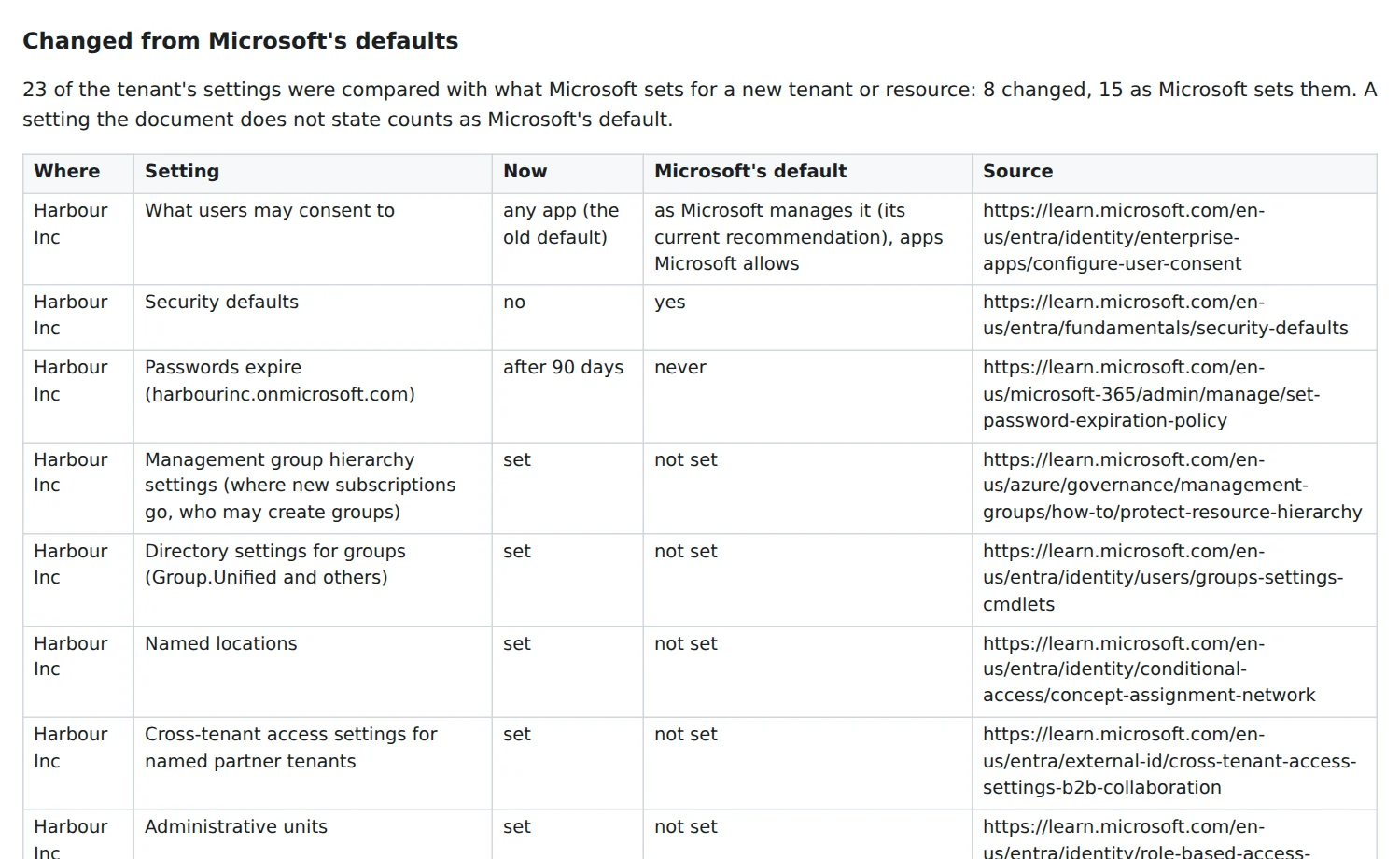
- Settings changed from each provider's defaults, with the default and its source
- Every statement comes from what was read; what could not be read is listed with the reason
- A workbook of every record and a complete export of every raw document
Where each part of the estate could go
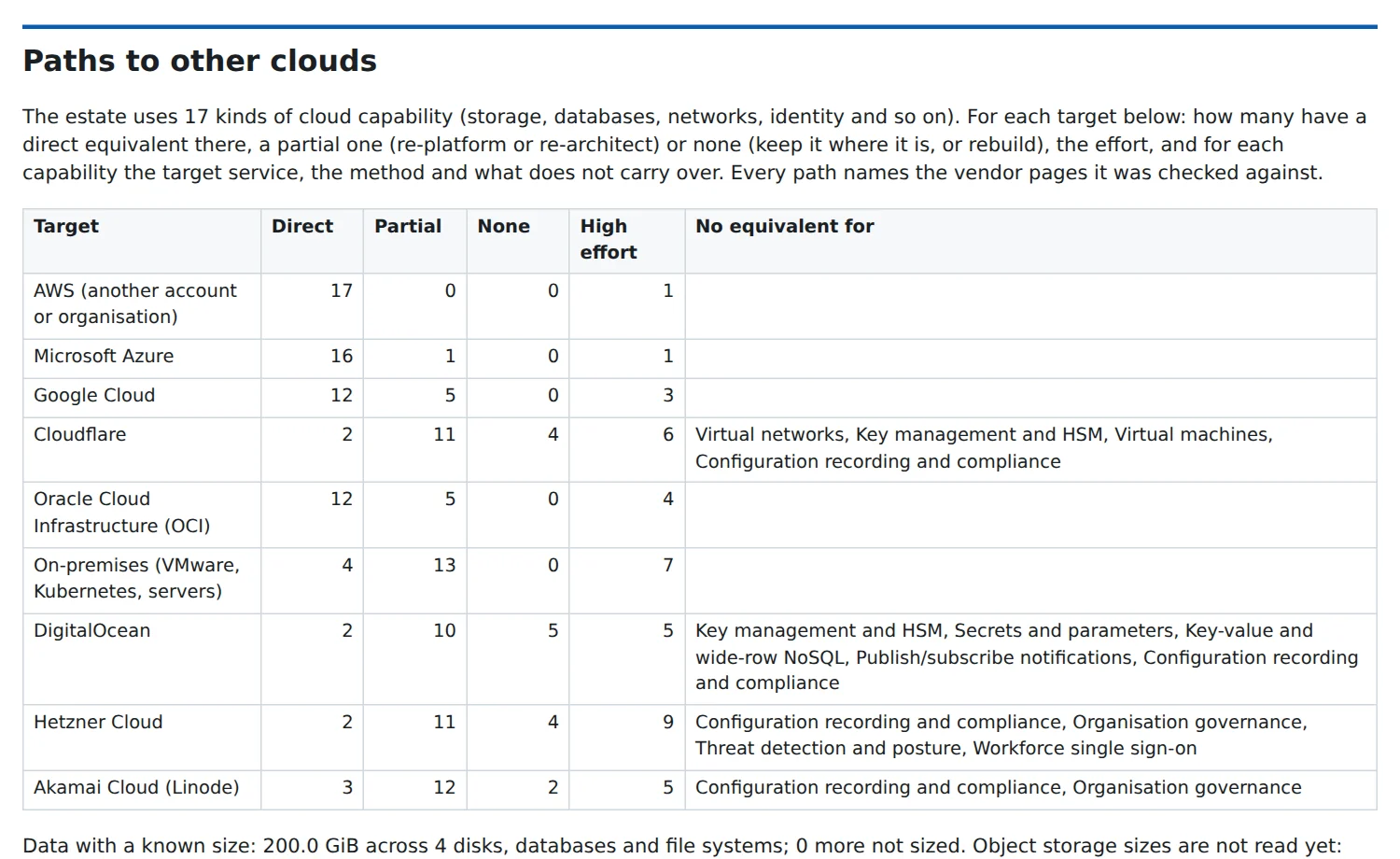
TenantShuttle names what each service in use does, then looks it up in a catalogue for each destination: the service that does the same job, how well it fits, how to move it, what carries over and what does not, the effort and the downtime. Every path cites the vendor pages it was checked against.
- Readiness, blockers and effort for nine destinations, side by side
- Services being retired by the provider, flagged where the estate uses them
- Commitments a move must honour, such as reserved capacity, with their end dates
A move plan that never takes anything over quietly
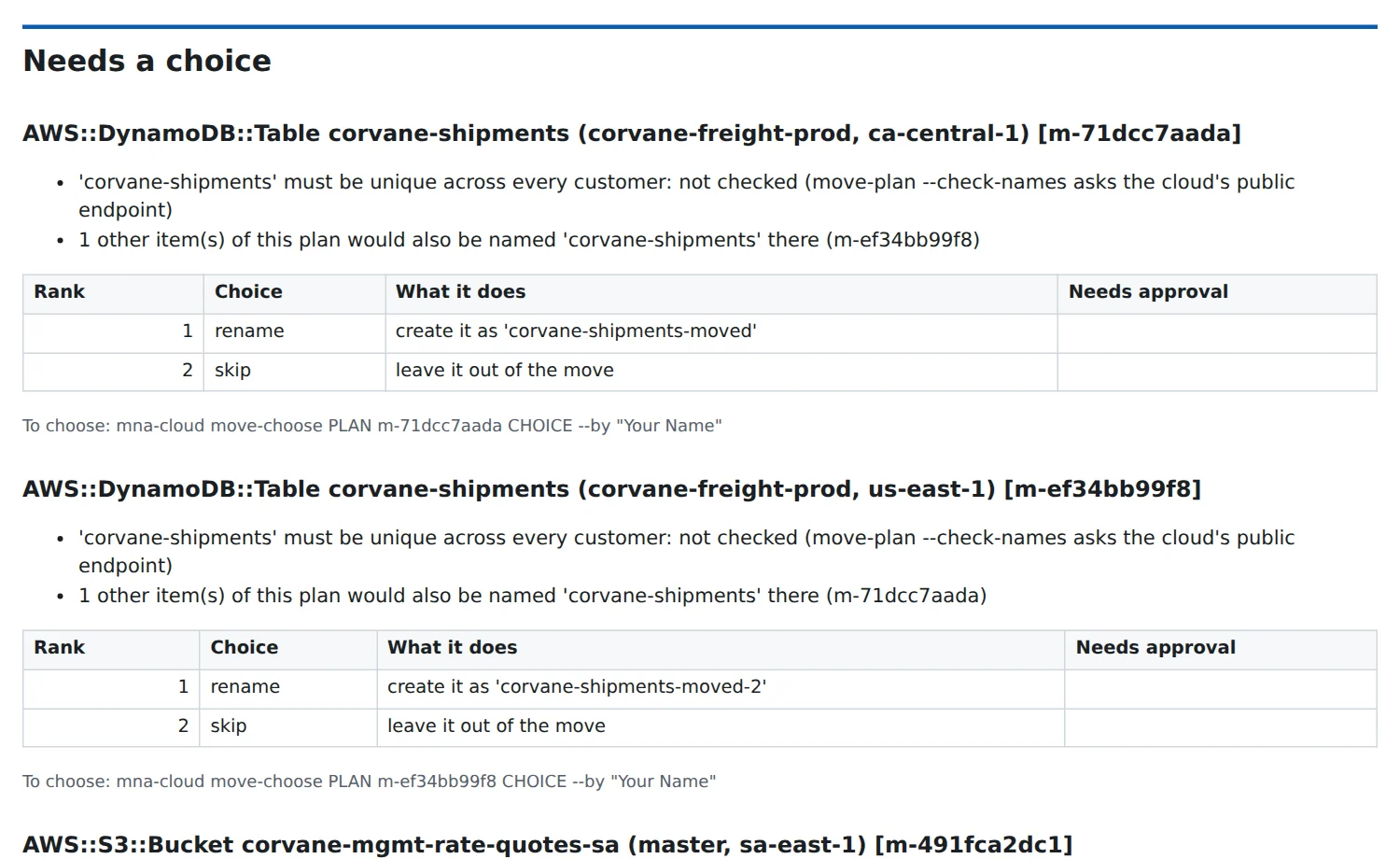
Before anything runs, the plan checks every name the move would create against what the destination already holds, the cloud's names that must be unique across every customer, and the plan itself. Each clash comes with ranked fixes. Anything that would overwrite, merge or put resources into an existing account waits for a named person to approve that one item.
- Each cloud's naming rules: where a name must be unique, its case, length and characters
- A notice per held item: what exists, what will change, what cannot be undone
- Approvals lapse by themselves when the source or the destination changes
Read-only is a promise you can check
The company you are buying lets you look inside its clouds before the deal is done. TenantShuttle is built so that look cannot change anything, and so its administrators can see exactly what they granted.
Reads only
Every request is checked against a reviewed list of read operations before it is sent; anything else is refused. In our own lab, the clouds' audit logs show no change made by a collection.
Access they grant
The access request is a set of scripts the company's administrators read and run themselves. It asks for read and list permissions only, and they can take it back at any time.
No secrets kept
Settings are recorded, secret values are not. Lists that could return secrets are never asked for, and each one skipped is listed with the reason.
Where TenantShuttle fits
TenantShuttle is part of MNA Tools, a set of IT tools for each stage of a deal. It covers the clouds; the others cover the outside view, the network and the risk register.
Before you sign
Read the target's clouds with the access its administrators grant: what runs where, what it costs and commits you to, who has access, and what would block a move.
Day one
Know which accounts, subscriptions and identities you now own, which guardrails apply, and who is told when something goes wrong.
Integration
Choose a destination per workload, plan the move with every clash and held item in view, and compare collections to see what changed along the way.
Questions people ask first
Which clouds does it read?
Microsoft Azure and Microsoft Entra ID, and AWS: every account in an organisation and every region it has enabled. Google Cloud is read too, as a preview. See the clouds it reads.
Where does it run, and where does the data go?
On your own computer: a Windows installer that needs no administrator rights, or a Docker image. What it reads is kept in an encrypted project on your side and is never sent to us. TenantShuttle does not call home.
Can it change anything in the company's clouds?
Reading cannot: every request is checked against the list of reads, and the access the company grants is read-only. Building, choosing and approving a move plan change nothing either. Carrying out moves is in development, and every path is proven in a lab before it is offered.
How do I get it?
TenantShuttle is available on request. Tell us about the deal and the clouds involved, and we will come back to you.
Taking on a cloud estate?
Tell us about the deal and the clouds involved. TenantShuttle is available on request.